
1. Field Summary
- Size
Standard 5v5 mini football pitch: 22m × 42m (tolerance ±2m). - Pole Quantity
Recommended 4 poles, placed at 4 corners. - Lighting Demand Level (G1/G2/G3)
For amateur training and community sports, G2 is optimal:- Average Illuminance: ≥120 lux
- Uniformity (U0): ≥0.5
- GR (Glare Rating): ≤50
Why G2?
It provides strong brightness suitable for fast movement and camera recording, while staying energy-efficient and cost-effective.
2. Solar System Design

- Panel Capacity
Each pole equipped with 360–420W mono solar panel;
Total system: 1,440–1,680W. - Controller Type
Smart MPPT controller (≥95% conversion efficiency), supports:- Constant current LED driver
- Adaptive lighting schedule (e.g., 100% 18:00–21:30, 70% after)
- Over-charge / over-discharge protections
- Battery Cycles
LiFePO4 battery capacity per pole: 24V 50–80Ah, rated cycle ≥4000@80% DOD,
Enough to support 2–3 rainy/cloudy days backup.
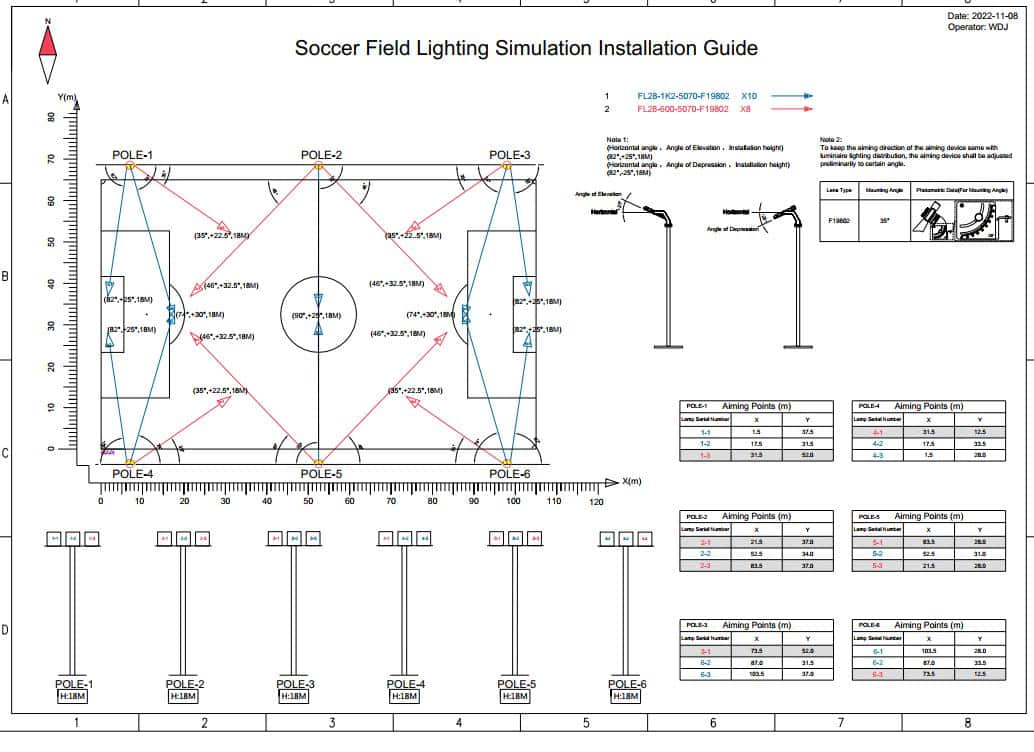
3. Lighting Layout
- Pole Height
6–8 meters optimal; reduces shadow and glare on goalkeeper box. - Beam Angle
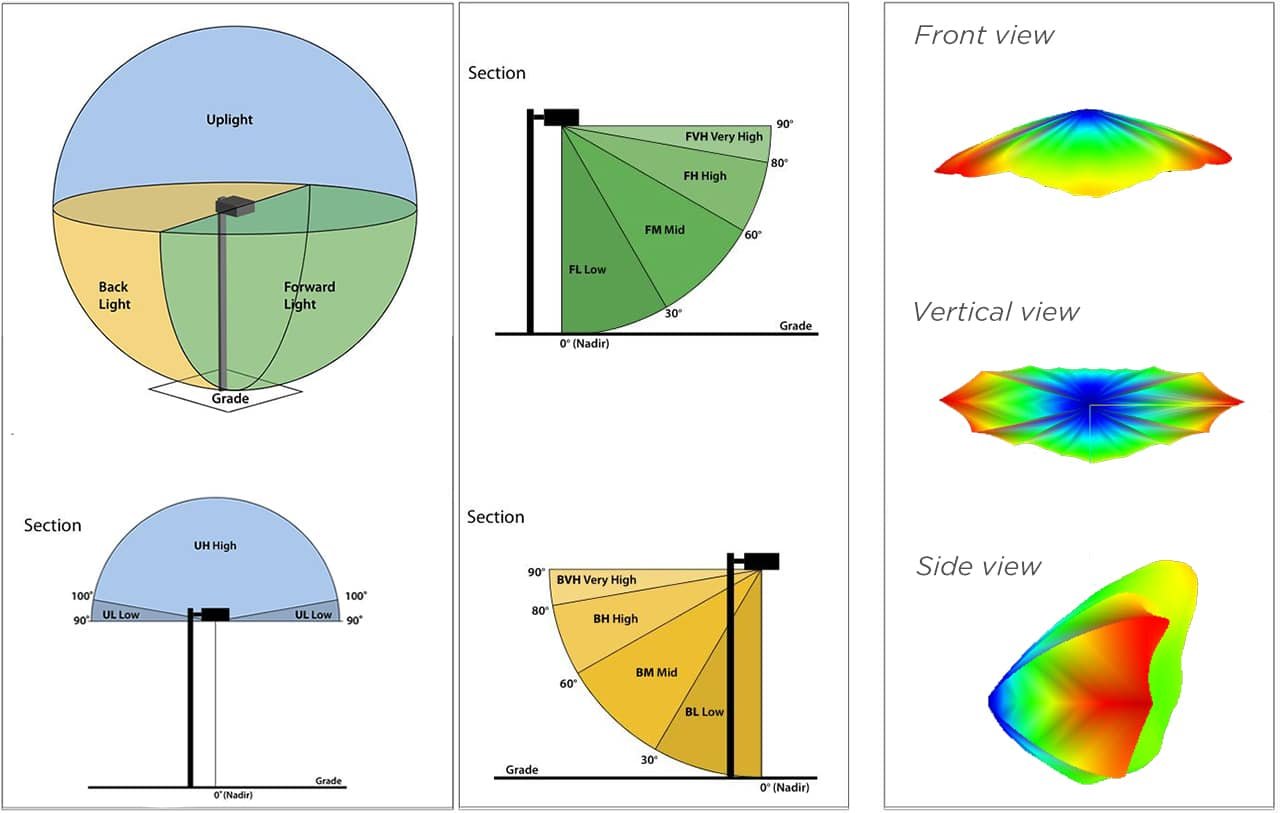
Use Type III / asymmetric 60°×120° or narrow + wide hybrid.- Central area coverage with 30–60° beams for penetration.
- Side area coverage with 90–120° beams to prevent dark zones.
- Distribution Diagram
Four corner poles, each with 2–3 LED modules pointing diagonally to center.
Target: overlapping light cones → smoother uniformity → reduced blind spots.
4. Night Performance (Measured)
Based on typical LED 200–240W × 8–12 units field test
- LUX Value
- Center zone: 130–160 lux
- Goal area: 120–140 lux
- Sidelines: 90–110 lux
- Uniformity
Achieved 0.50–0.55, under international G2 standard. - Glare
Using anti-glare lenses + elevated mount:- GR: 45–50
- No direct light exposure to goalkeeper or spectators.
5. Budget Advantage
- No cable trenching, no grid connection → 0 civil wiring cost
- Power generated and consumed locally
- Lifetime ROI > Hybrid/AC system
- Installation time: 1–2 days vs 2–3 weeks for AC stadium lighting
Typical 5v5 field total hardware cost:
USD 9,800 – 14,600 (range varies by battery & panel size)
6. Operation Cost Per Year
- Solar only: ≈0 USD electricity
- Remote monitoring saves onsite labor
- Real-time dimming reduces unnecessary consumption
Compared with a 5v5 AC field (8×240W × 4h/day × 365):
~2800 kWh/year → USD 350–650/year (depending on region)
Solar system saves 100% of that.
7. Maintenance Plan
- Quarterly inspection of:
- PV surface cleaning (dust, leaves)
- Cable tensions & waterproof connectors
- Battery health check every 6–12 months
- Software diagnostic: lighting schedule + controller logs
- No lamp replacement for ≥50,000 hours (LED lifespan)